"Friend, move up higher."
All true authority must be given. Real authority is bestowed. God alone derives authority from Himself. God is creator, man is creature. All creaturely authority is bestowed. A father receives authority with fatherhood, a leader through public appointment, an elder through the church.
Today, the spirit of the age hates true authority and worships raw power. The world distrusts every legitimate ruler, office, and rank. We then turn and bow before money, influence, and the mass consensus. Modern man will obey anything except an authority honest enough to call itself an authority. Thus, we have not abolished authority. We have only traded rulers who could be named for rulers who pretend they do not rule.
The Usurpation of Authority
True authority can answer the question, "Who gave you the right?". Naked power has no answer. Power alone can only answer with a threat.
Real authority stands inside a hierarchy of authority.
Matthew 8:9 “For I am a man under authority, having soldiers under me: and I say to this man, Go, and he goeth; and to another, Come, and he cometh; and to my servant, Do this, and he doeth it.”
Power without authority must always bully, flatter, and deceive. Power’s only authority is its ability to remain in power.
Culture bestows authority through formal rites: coronation, wedding ceremony, elder ordination. This is a truth that our age denies: a man must be given an office before he may rightly rule.
The world has now abandoned the idea of rightful rule. Some of the forms survive as empty husks. Elections and appointments are conducted, but we no longer believe anything sacred has occurred. Mass democracy has reduced high office down to a short-term prize awarded by low-information voters. Voters themselves distrust the ruler as soon as he is seated.
Our rulers proclaim their commitment to ‘leadership’ and then avoid responsibility wherever possible in the name of ‘risk management’. These false leaders are terrified of the sort of true authority by which they could be recognized, rewarded, or punished. Thus, while on paper the office remains, yes we still have generals, executives, and senators, but the genuine cultural authority that belonged to the office has been dissolved.
Our leaders are weak and neurotic. Every ruler feels like an imposter because the world has abandoned the beliefs that bestowed authority to hold their position. And the modern man prefers this weakness. A culture that hates authority prefers rulers to be questionable. Every superior stands trial before his inferiors. We enjoy when leaders quake before ‘the people’.
We are communist. We are egalitarian. We want the ‘underdog’ to win, so we hate anyone who has real authority to command. In such a world, the only men who stand up to rule are the men willing to hide the truth. To say what the people want to hear. What we get is a country led by liars, a country led by men who make no claim to authority but secretly wield power, an aristocracy of thieves.
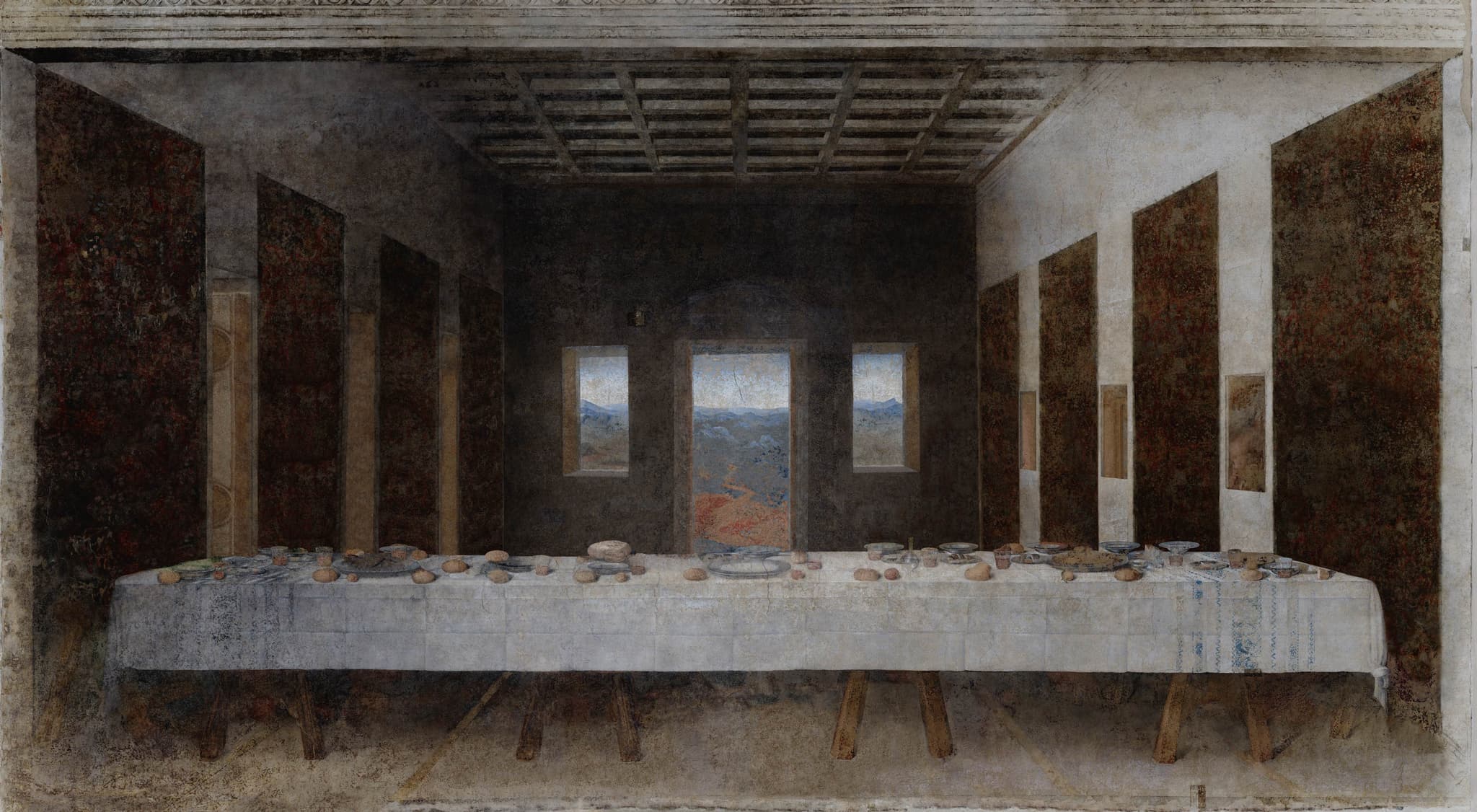
2,000 years ago, Jesus watched the guests at a dinner choose the places of honor. His word to them was to take the lower seat, and leave it to the host to say, "Friend, move up higher" (Luke 14:7-11). The Book of Proverbs teaches the same: do not put yourself forward before the king; better to be called up than to be humbled before a noble (Proverbs 25:6-7).
Christ’s wisdom assumes a host of the feast. Someone owns the house, knows the company, and holds the authority to arrange the seating. Christ’s advice to take the lower place makes sense because there was a host, a man with authority, with the right to say to another man, "Come up higher." Godly truth is this: a righteous man refuses to crown himself because in God’s order a true crown must come from another.
In our wicked and twisted generation, the host of the feast is dead. The dinner guests have killed him. Who will wipe this blood off us? No longer does the host come down the table and greet the guests. No hand rests upon the shoulder of the quiet man and says that his worth has been seen. The corporation might buy lunch at his retirement, but all the best seats in the company will be occupied by those who move their own name cards. And indeed, the free market applauded their boldness.
In this apostate age, a righteous man who obeys Christ often sits beneath unworthy men who promoted themselves. The righteous watch while dishonest men become their rulers. The social order punishes the humble man for refusing to seize power and then uses his ‘failure’ to prove that the usurpers were right all along. A world ruled by power has no place for the man who refuses to steal.
Into this world is born the quintessential modern man: the striver. The striver may be seated too low. His place may be exactly right. He may even be seated far above his worth. None of this alters his character.
He rises every few minutes to tap the host on the shoulder. Has the host seen his latest work? Wouldn’t the feast run more smoothly if he were seated nearer the head? Even his modesty is a display. The striver bows low so that the room may admire how little he thinks of himself.
A culture that has no category for rightful superiority can only fill its high offices through the competition of shameless strivers. The man least restrained by shame gains the first advantage.
"Let another praise you, and not your own mouth," says Proverbs 27:2. The world responds: if your own mouth remains silent, no praise will ever come. And yes, that answer may be true in our broken world, but it is also a death sentence for our civilization.
The Anatomy of the Machine
Here lies the cruelty: in our culture, every man is asked to choose between obscurity and usurpation. He either remains in the lower seat and is forgotten, or he becomes a striver and takes for himself what no one has rightfully given him. The world created this striver funnel when it systematically destroyed the respect for rightful authority.
No secret conspiracy was needed for this. A culture that worships power will always reward the thief who is successful in his fraud. Everywhere teaches the same lesson: promote yourself or disappear. Pull yourself up by your bootstraps, young man.
Good men are scolded and taught that hesitation is cowardice and humility is weakness. The vice of vainglory has been renamed ‘maturity’ because properly wielding vanity has become the business of public life.
A man who submits to this malignant order allows the system to remake his soul. He begins to see his friendships as resources and his accomplishments as leverage. And yes, he may indeed get the promotion. But in the process, he has been bent into a creature unfit to wield authority.
The righteous man pays a different price. He keeps his soul and loses the world. His work will be stolen and credited to louder men. His ideas are recognized only after a striver repeats them. When he seeks justice, he is told to be realistic, which means he is told to play the game.
But the game is corrupt, and it did not accidentally fall into corruption; it was engineered from the ground up to reward the powerful and the shameless. The yoke of tradition was cast off and that meant proper order was rejected as slavery.
Freedom is now the power to go beyond all unchosen bonds. The rejection of human bonds such as family, community, or even gender. All demonized as biological tyranny; unjust and oppressive.
It is now intensely unpopular to accept that there are ‘limits’ to anything, except of course rightful authority. Limitation is seen as a shackle to the true god of our age: autonomous human power.
Individual autonomy will always be enemy of true authority. Authority, properly practiced, will always limit human autonomy, and we choose ourselves. Turning to worship our individual ‘freedom’, submission to authority becomes blasphemy against the god of human autonomy.
The economy of such people mirrors the decay. The market has become trench warfare, a blown-out wasteland where no man may claim sovereignty. The free market is an idol to which emasculated leaders pay lip service. Which is to say there is no one running the show except pure power and greed.
Right Authority: Exousia and Dunamis
Luke 9:1 “Then He called His twelve disciples together, and gave them power (Greek: dunamis) and authority (exousia) over all devils, and to cure diseases.”
In Greek, exousia is authority: the right to command.
A police trooper is not permitted to pull over a driver because he is the physically more powerful man. No, the state has clothed the trooper, badged him, and sent him out on the road to act with authority, within the proper bounds of his office. He may indeed possess strength, dunamis, but his office is his exousia. The man may lack dunamis, he might even be wicked, and yet he holds the exousia of his office until he is lawfully stripped of it. The office may be weightier than the man. As we say: salute the uniform, not the man.1
Luke 9:1 sets these two words side by side. Jesus gives the Twelve both dunamis and exousia over demons and diseases. They receive the might to do the work and the right to do it as well. Ability without authority would make them rebels acting on their own. A warrant to cast out demons without the ability to do so would leave them helpless. Christ gives them both. The disciples go because they are sent, and they prevail because the Sender gave them power.
We see power and authority joined in the person and work of Jesus Christ. The crowds heard Him teach “as one who had authority (exousia) and not as the scribes” (Matthew 7:28–29). His words had such holiness and weight that His dunamis was self-evident as rightful exousia. He spoke with the power of divine authority.
The crowd heard that authority in Him, although they did not at that time trace its origin. We now know where it came from. At Christ’s baptism, the Father named Him as His beloved Son and the Spirit came upon Him like a dove. Jesus came out of the Jordan openly bestowed with divine exousia.
After his baptism, Jesus spoke with authority. He healed the paralytic “so that men might know that the Son of Man has exousia on earth to forgive sins” (Luke 5:17–26). He told the Jewish leaders who opposed him that the Father had given him “exousia to judge” (John 5:25–27). In his high priestly prayer Christ confessed that the Father had given Jesus “exousia over all flesh” that God should give eternal life the elect (John 17:1–2).
After Jesus finished the work, bore the curse, and rose from the dead, He declared: “All exousia in heaven and on earth has been given to me” (Matthew 28:18). Even in His glory, Christ’s authority was given.
A man may have dunamis. He may be smarter than his elders, stronger than his superior, or more expert than his employer. None of these give him the authority to crown himself. His gifts may show that the host ought to call him up higher; but he should not call himself. Success can prove that he had the ability to seize power. But that does not thereby give him the authority that the power demands. Exousia comes from a giver, or it is a lie laid over a thief.
The ultimate judgment upon the striver is the person of Jesus Christ. Christ did not glorify Himself to become our High Priest. The Father appointed Him (Hebrews 5:4–5). If the sinless and perfect Man waited to be given authority, the striver stands condemned before he begins. The striver may speak of calling, gifting, and need; it only betrays his unbelief in the God of the universe. Does the striver not believe that God himself knows his gifting? In a world where God is in control, nothing justifies the striver’s usurpation.
From all eternity, the Son of Man has lacked nothing. He holds all might and glory with the Father and the Spirit. As the Messiah, Christ made Himself of no reputation and took the form of a servant. At His baptism, He was publicly named, anointed, and sent. He went where He was sent, spoke what He was given to speak, and finished all the work that had been given to Him.
The devil struck against Christ’s calling when he tempted Him with the kingdoms of the world (Matthew 4:8–10). He offered rule without suffering, a crown before the Father gave it. Satan tempted Christ to turn power into self-rule. Christ refused. He would receive the kingdom only from His Father’s hand.
And in return the Father raised Him, vindicated Him, and seated Him at His right hand.
Jesus humbled Himself and became obedient unto death; therefore God exalted Him and gave Him the name above every name (Philippians 2:8–11). The Father raised Him, seated Him above every rule and authority, put all things under His feet (Ephesians 1:19–21). Obedience before exaltation. Cross before crown. All authority in heaven and on earth stands behind Christ because the Father gave it.
In Christ, dunamis and exousia meet. His power wholly fills the office laid upon Him. He does not need to borrow authority from the crown; the crown rests without strain upon the only head fit to bear it.
Yet even this perfect fitness did not become usurpation. Christ’s power did not become its own warrant. The Son only received what the Father bestowed. The striver wants Christ’s power without Christ’s suffering, Christ’s authority without Christ’s submission.
The Spirit of Antichrist
The age of self-promotion catechizes men to play the game. Good men are told to seize power now and use it for good later. Become a striver, gain the office, and justify the means by the excellence of your intentions. This is a spiritual snare.
It is the spirit of Antichrist: the promise of power by denial of the cross. The striver serves only to further his own exaltation. A christ who is powerful because he took the devil’s bargain.
When Satan offered Jesus the kingdoms, he wasn’t lying. It was truly an easier road to power. The price was a single act of worship: one small bow to the wrong god. Every piece of advice we hear today to "play the game" is the exact same proposal in a new dialect.
And the game does not become holy when a Christian plays it. The game changes him. A righteous man who lies, flatters, schemes to win does not arrive in office as a righteous man with a few scars. He arrives as the finished product of the worldly machine. Instead of capturing the office for Christ, the office has captured the man for the devil.
A good man may sit too low for his entire life and never be called higher by an earthly host. He may only receive the scraps while shameless men devour the best portions. He may die with his gifts unused by the community that needed him. Yes this is very possible. Humility is not a reverse-psychology technique to being promoted. True obedience comes from love and respect, not secret ambition.
Jesus was hated by the world to the bitter end. And then He told His disciples that the servant is not greater than his master (John 15:18-20). The Christian who is passed over for promotion has not discovered a defect in Christianity. Christianity is bearing the world's hatred of Christ. The lower seat places the Christian nearer to his Master, who was rejected by His own disciples, condemned by the Jews, and butchered by the Romans outside the city gate.
It is not promised that our dying country will recover its senses and recognize godly men. The world may never give a late apology. No, the righteous man has treasure laid up where moth and rust do not destroy and thieves do not break in and steal. His inheritance is not an earthly office, but Christ Himself.
Therefore for the godly man the dilemma remains: usurp power or remain in obscurity while evil men rule.
The Christian man refuses to usurp. He will not worship Satan for the kingdoms, nor will he lie or steal to then exercise power ‘for good.’ He refuses to call corruption ‘pragmatic’ or deception ‘tactical’. He prefers obscurity alongside his Master rather than glory with world.
He sits in the lower place while the strivers congratulate each other at the head of the table.
He remains there because Christ is Lord, authority must be given, and faithfulness is a sweeter victory than earthly joy.
Our society’s host of the feast has been killed, but the true Host rose from the dead. A righteous man ignores the summons of the world that hated his Master. He waits for the true Host to come and tap him on the shoulder saying: “Friend, come up higher.”
Footnotes
-
The distinction between dunamis and exousia, together with the uniform-and-office analogy, draws from Jay E. Adams, The Place of Authority in Christ’s Church, chapters 2–3. ↩